Founder & Stewardship
Daniel Alexander Choleva.
Doctor · Independent Researcher · Writer · Founder and Steward. Daniel Alexander Choleva is the founder of The Elysian Institute and steward of The Elysian Gardens in Central Portugal — bringing human vitality, ecological intelligence and the classical study of beauty into one living field.
Short biography
A life at the meeting point of medicine, ecology and beauty.
Daniel Alexander Choleva is the founder of The Elysian Institute and steward of The Elysian Gardens in Central Portugal. A doctor, independent researcher and writer, he has spent more than fifteen years studying the conditions through which human beings, communities and places become more whole. His work crosses lifestyle medicine, sleep, movement, nourishment, contemplative practice, depth psychology, ecology, classical philosophy and the arts. At Elysium, these inquiries are being given physical form in a living campus of water, orchards, forest gardens, culture and future low-density hospitality.
Biography
Standard biography.
Daniel Alexander Choleva is a doctor, independent researcher, writer, and founder of The Elysian Institute for the Discernment and Science of Aesthetics and Wholeness, and steward of The Elysian Gardens in Central Portugal.
Born in Denmark and shaped by a formative childhood in Israel, he later spent years travelling and studying across Europe and Asia. Since 2009, his work has developed through sustained personal practice, research, writing and observation at the meeting point of lifestyle medicine, physiology, nutrition, movement, sleep, contemplative disciplines, depth psychology, classical philosophy, ecology and the arts.
The vessel
His central proposition is that psyche, body and planet are nested living vessels: each conditions the others, and none can be cultivated in isolation. From this follows an understanding of beauty not as decoration, but as the visible flowering of coherence — form, function, vitality, proportion, intelligence and care brought into right relation.
Present work
Daniel is developing the Institute's Universal Principles and The Manual for Life while shaping The Elysian Gardens as their living campus: a place where land, water, food, architecture, movement, quiet, culture and hospitality may be studied and practised as one field. His role is to protect the project's intellectual integrity, ethical direction and long-horizon coherence as it moves from founding vision into durable institution.
Founder and stewardship profile
Originator, research director, long-term steward.
Daniel Alexander Choleva is the originator, founder and long-term steward of Elysium. He leads the mission, research architecture, Institute framework, brand, estate philosophy and design coherence, while the operating model is being structured around professional architectural, hospitality, financial, legal and technical leadership. His role is to preserve the whole across disciplines and phases rather than substitute for specialist execution.
Daniel has spent more than fifteen years developing the underlying body of work across lifestyle medicine, human vitality, contemplative practice, depth psychology, ecological design, classical philosophy and aesthetics. Based in Central Portugal since 2019, he is now guiding the transformation of The Elysian Gardens from an existing rural estate into the living campus of The Elysian Institute.
Extended biography
A demanding comparative education.
Few founders begin with a business category. Daniel Alexander Choleva began with a question: what conditions allow life to become more coherent, vital, beautiful and whole?
Daniel is a doctor, independent researcher, writer and the founder of The Elysian Institute for the Discernment and Science of Aesthetics and Wholeness. He is also the originating steward of The Elysian Gardens, the Institute's developing living campus in Central Portugal.
Formation
Born in Denmark and shaped by a formative childhood in Israel, Daniel grew up between cultures, languages and different understandings of belonging. In adulthood he travelled widely across Europe and Asia, spending extended periods in places where traditional medicine, contemplative practice, ecology and communal life could be encountered outside the abstractions of modern institutions. These years did not produce a single borrowed doctrine. They formed a demanding comparative education: to observe what strengthens life, what merely promises to do so, and what becomes distorted when a partial truth is mistaken for the whole.
Fifteen years of inquiry
For more than fifteen years, his inquiry has joined evidence-informed lifestyle medicine with the older arts of human cultivation. His fields of study include sleep and circadian rhythm, nourishment, movement and physical capacity, contemplative practice, psychobiology, depth psychology, ecology, classical philosophy, comparative wisdom traditions, architecture and the arts. His writing ranges from research notes and essays to philosophical synthesis and the evolving Manual for Life. Throughout, he insists upon a disciplined distinction between evidence, hypothesis, interpretation and philosophy.
Nested vessels
The unifying idea is the vessel. The psyche is held within the living vessel of the body; the body is held within the greater vessel of the land and planet. Health, perception, culture and environment continually enter one another. A weakened body can narrow the life of the psyche; a degraded landscape can impoverish both. Conversely, well-ordered conditions — light, rest, clean water, nourishing food, movement, attention, beauty, human warmth and contact with living nature — can enlarge the field in which a person becomes capable of discernment, creativity and service.
Beauty as coherence
This is also the basis of Daniel's understanding of aesthetics. Beauty is not an ornamental layer placed upon life after practical matters are settled. It is the flower of wholeness: what becomes visible when form, function, vitality, proportion, intelligence, material truth and care enter right relation.
A physical home
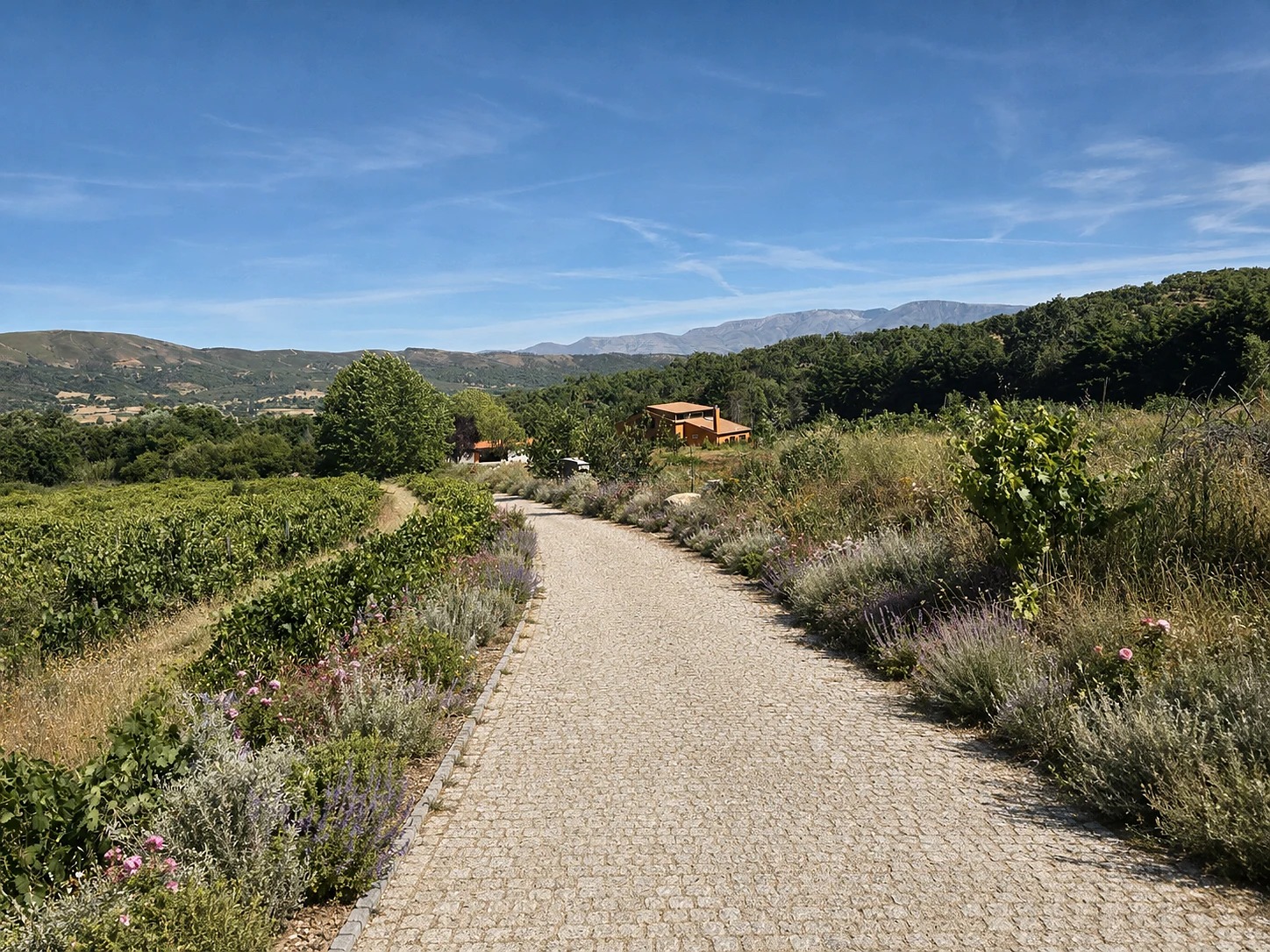
Since settling in Portugal, Daniel has worked to give these ideas a physical home. The Elysian Gardens bring together an existing rural estate, water, orchards, forest-garden systems, architecture, food, movement, quiet, culture and a proposed low-density hospitality programme. The Institute gives the work language, method, publication and continuity; the Gardens give it body.
Founder-led, not founder-fragile
Daniel's role is that of originator, research director, aesthetic guardian and long-term steward. He is building the project to be founder-led without being founder-fragile: intellectually coherent, professionally governed and capable of outlasting any single personality. His ambition is not to create another transient wellness brand, but a durable house of inquiry and a living demonstration of how medicine, ecology, philosophy, culture and hospitality may once again belong to the same world.
A note from the founder
Why I founded Elysium.
I founded Elysium from a conviction that the central questions of human life have been divided too narrowly. The body is studied without the psyche, the psyche without the land, medicine without beauty, and beauty without truth. My work is an attempt to restore the conversation between them.
The Elysian Institute gives this inquiry language, method and continuity. The Elysian Gardens give it a living body: water, soil, food, movement, rooms, paths, silence, culture and welcome. I do not regard beauty as an ornament. I regard it as the visible consequence of things entering right relation. My task is to protect that coherence while inviting the specialists, partners and future stewards capable of making it durable.